AI Recruiting Tools vs AI Recruiting Agents: What’s the Difference?
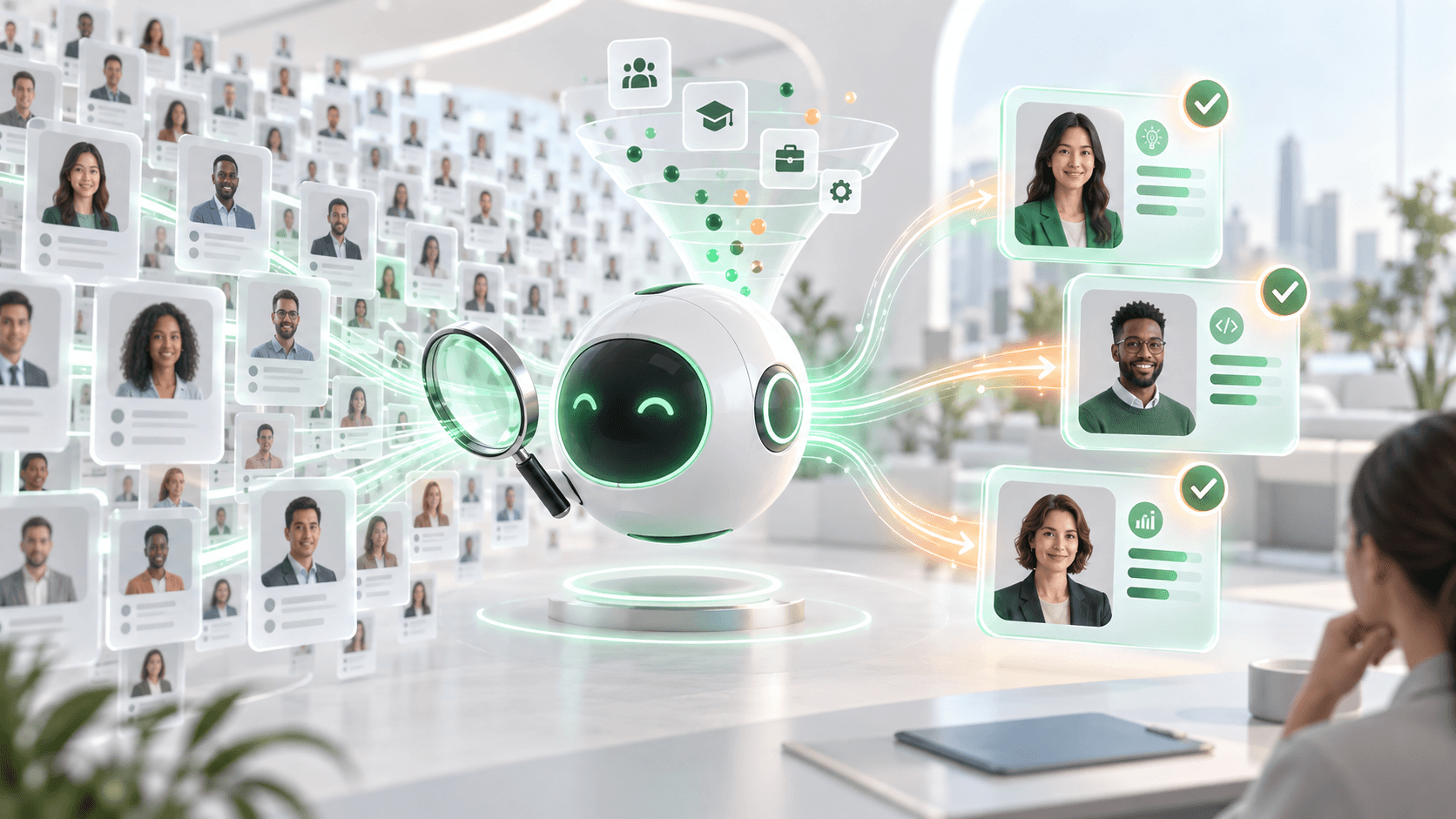
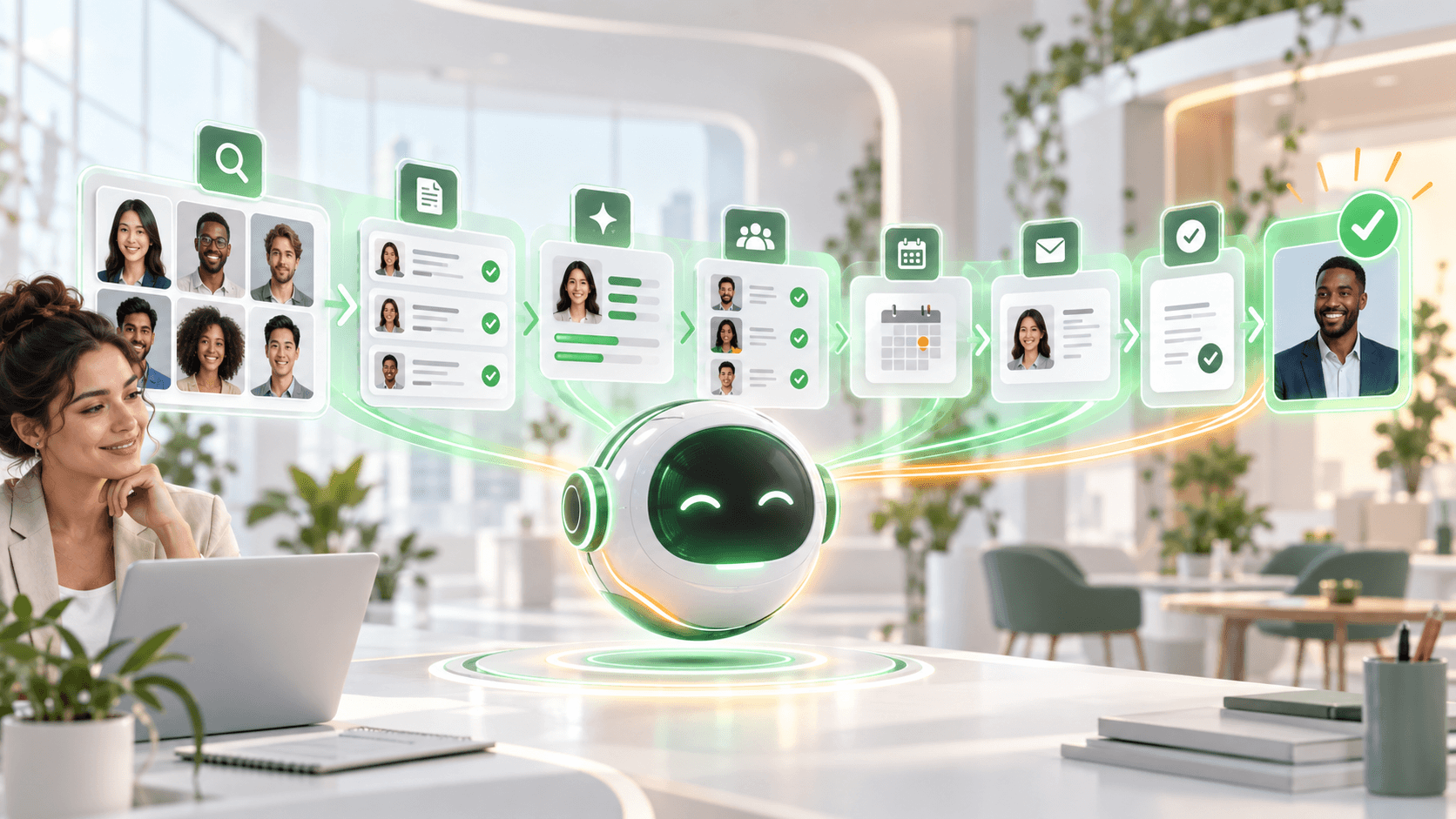
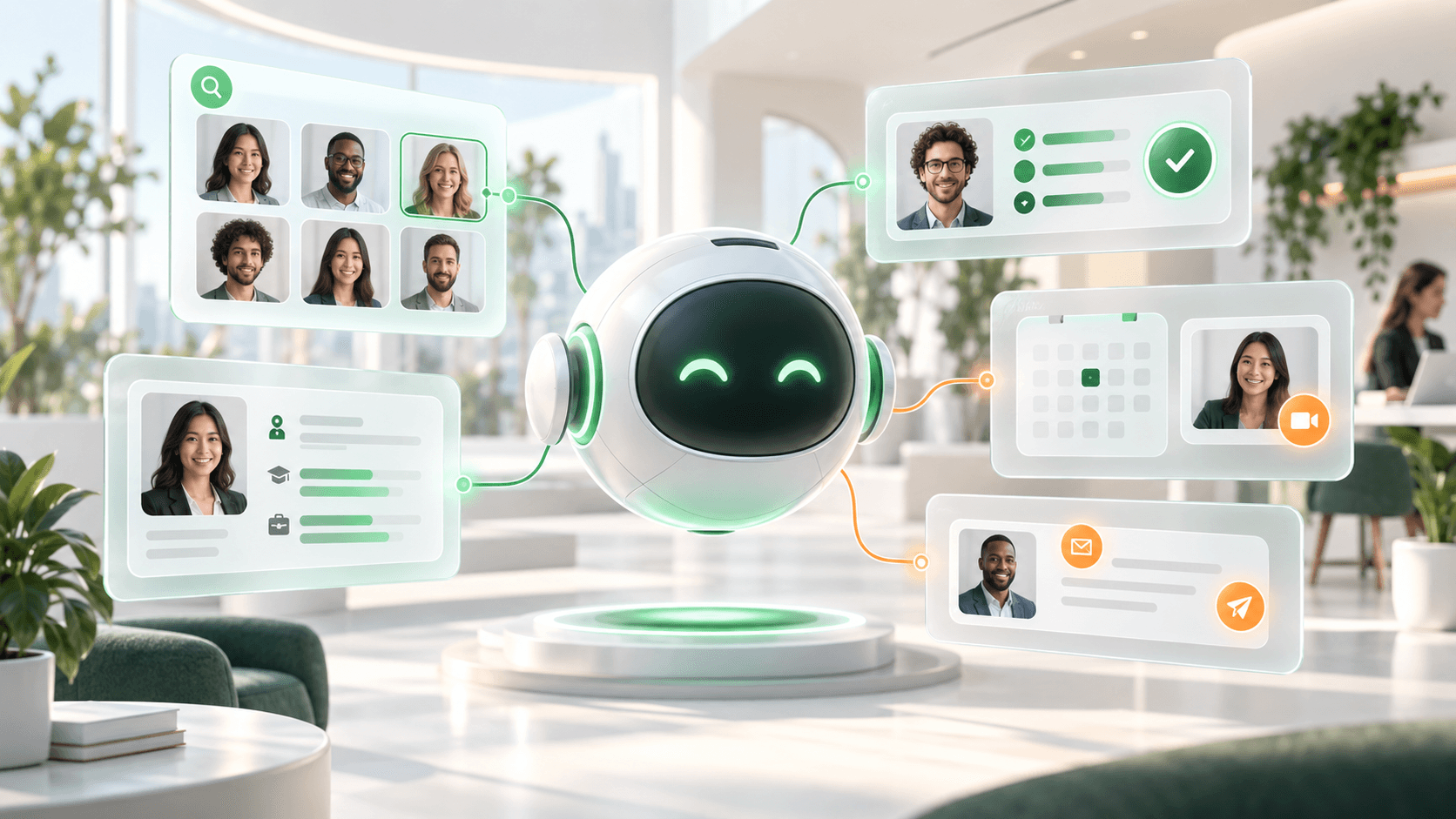
Introduction The AI recruiting market is becoming crowded. Some products help write job descriptions. Others search for candidates, enrich profiles, generate outreach, screen applicants, schedule interviews, or analyze assessments. Then there are AI recruiting agents. The difference matters because a tool and an agent can solve very different problems. An AI recruiting tool usually helps with a defined task. An AI recruiting agent is designed to coordinate multiple tasks toward a broader objective. Instead of asking, “Which feature should I use next?” the recruiter can start with, “Here is the hiring outcome I need.” This article explains the difference between AI recruiting tools and AI recruiting agents, how agents compare with chatbots and copilots, when each approach makes sense, and how ezyConneqt fits into the agentic recruiting model. What Is an AI Recruiting Tool? An AI recruiting tool is software that uses artificial intelligence to assist with one or more recruiting activities. Examples include AI resume summarization, job-description generation, candidate matching, sourcing, outreach generation, interview scheduling, assessment support, or recruiting analytics. These tools can be extremely useful. The limitation is not that they are “less advanced.” It is that they are generally designed around a specific function. If a recruiter needs to solve one task, a focused tool may be exactly what is needed. What Is an AI Recruiting Agent? An AI recruiting agent is designed around a broader objective. For example, instead of asking the system to “write an outreach email,” the recruiter can say: “Find qualified senior backend engineers in Bengaluru, enrich their profiles, contact the strongest matches, screen responses, coordinate assessments, and keep me updated.” The agentic workflow is: Goal → Plan → Search → Enrich → Engage → Screen → Test → Verify → Outcome The agent coordinates the sequence, while the recruiter remains involved in decisions that require judgment or approval. AI Recruiting Tool vs AI Recruiting Agent: The Core Difference The simplest distinction is workflow scope. An AI tool generally helps you perform a task. An AI agent helps you pursue an outcome. For example: • Tool: generate a candidate outreach message. • Agent: identify relevant candidates, research them, generate personalized outreach, send approved communications, track responses, and move suitable candidates into the next stage. Another example: • Tool: summarize ten candidate profiles. • Agent: search for candidates matching a role, enrich them, prioritize them, summarize the strongest matches, and prepare them for engagement. The agent is not necessarily better for every use case. It is more appropriate when multiple tasks need to be coordinated. AI Recruiting Agent vs Chatbot A chatbot is primarily a conversational interface. It answers questions or responds to prompts. An AI agent can use conversation as the interface while performing actions behind the scenes. A chatbot might answer: “What skills should I look for in a data engineer?” An agent might receive: “Find 30 data engineers with five-plus years of experience in Bengaluru and prepare the strongest matches for outreach.” The important distinction is execution. The question is whether the system can continue working after the conversation starts. AI Recruiting Agent vs Copilot A copilot generally works alongside a human. The recruiter asks it to perform a task and then decides what to do next. An agent can take a broader objective and coordinate multiple approved steps. Copilots are useful when the recruiter wants close control over every action. Agents are useful when the recruiter wants to delegate operational work while maintaining oversight. Many organizations will use both. A recruiter might rely on an agent for sourcing and workflow coordination and a copilot for drafting or analyzing a specific piece of information. Can an AI Recruiting Agent Actually Do the Work? Yes, when it has the appropriate data access, tools, permissions, and workflow configuration. An agent can search for candidates, enrich information, coordinate outreach, organize screening, support assessments, and track progress. However, “autonomous” should not mean “uncontrolled.” The right design includes boundaries. Sensitive actions can require approval. Communication policies can limit outreach. Hiring decisions can remain with people. The strongest enterprise approach is controlled autonomy: AI handles approved operational work, and humans remain accountable for consequential decisions. What Recruiting Tasks Can an AI Agent Handle? An agentic recruiting workflow can connect several activities: Search: identify candidates based on hiring criteria. Enrich: add professional and contact context. Engage: support relevant personalized outreach and follow-up. Screen: organize information against defined requirements. Test: coordinate assessments. Verify: support relevant verification steps. Shortlist: present stronger candidates for human review. The value comes from connecting the steps rather than automating each one independently. Can AI Recruiting Agents Automate the Entire Hiring Process? No responsible recruiting strategy should assume that every hiring decision should become fully autonomous. AI can automate a large amount of operational work, but hiring includes human judgment, organizational context, interviews, communication, negotiation, and accountability. A better goal is selective automation. Automate what is repetitive and measurable. Keep humans involved where the decision is consequential, ambiguous, or relationship-driven. Why Is Agentic Recruiting Important? Recruiting technology has accumulated many specialized systems. The challenge is often not the absence of software but the fragmentation of work. A recruiter may search in one place, enrich in another, write outreach in another, track communication somewhere else, and manage assessments in a separate workflow. Agentic recruiting aims to make the workflow outcome-centric. The system coordinates work around the goal rather than requiring the recruiter to coordinate every tool manually. That can reduce context switching and create a more continuous recruiting process. How Does ezyConneqt Work as an AI Recruiting Agent? ezyConneqt approaches recruiting through an end-to-end agentic workflow. The recruiter communicates the hiring objective and relevant criteria. The recruiting agent can then move through Search → Enrich → Engage → Screen → Test → Verify. This makes the system more than a candidate database or message generator. It is designed to help execute the work between the initial hiring requirement and a qualified shortlist. The human remains in control. ezy handles operational work while the recruiting team focuses on evaluation, relationships,
Read article